4. Pattern Detection
Once the Process Models have been discovered, pattern detection is performed through subgraph discovery using Frequent Subgraph Mining (FSM). The resulting subgraphs are interpreted as collaboration patterns and can be grouped in the next step: Pattern Clustering.
Start the FSM algorithm
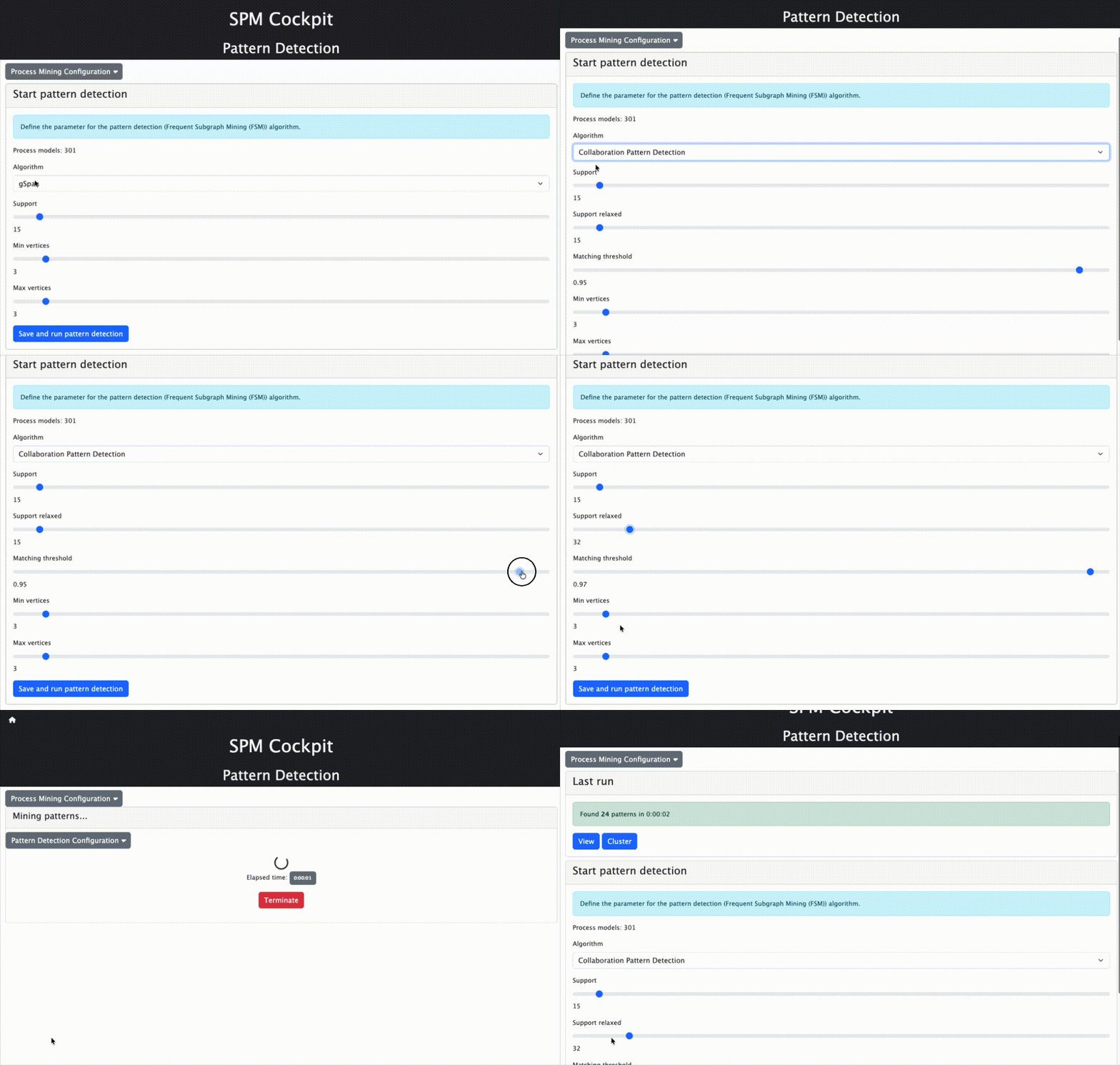
The first step is to configure and execute the FSM algorithm. Currently, the system supports the gSpan [1] and the Collaboration Instance Subgraph Mining (CPISM) algorithms. Depending on the chosen algorithm, the following parameters must be configured:
The input for the FSM algorithm consists of the process models discovered in the previous step. After submitting the form, the FSM process begins.
gSpan
- Support: The minimum number of occurrences of the subgraph.
- Min vertices: Minimum number of vertices allowed in the subgraph.
- Max vertices: Maximum number of vertices allowed in the subgraph.
[1] For details see Xifeng Yan & Jiawei Han. (n.d.). gSpan: Graph-based substructure pattern mining. 2002 IEEE International Conference on Data Mining, 2002. Proceedings., 3, 721–724.
Collaboration Pattern Subgraph Detection
Only for process models created with the Collaboration Process Instance Miner.
- Support (Exact): The minimum number of times the subgraph must appear exactly.
- Relaxed Support: The minimum number of times the subgraph must appear using a relaxed matching criterion.
- Matching Threshold: The similarity threshold used for relaxed support matching (for the Cosine Graph Similarity).
- Min vertices: Minimum number of (activity) vertices allowed in the subgraph.
- Max vertices: Maximum number of (activity) vertices allowed in the subgraph.
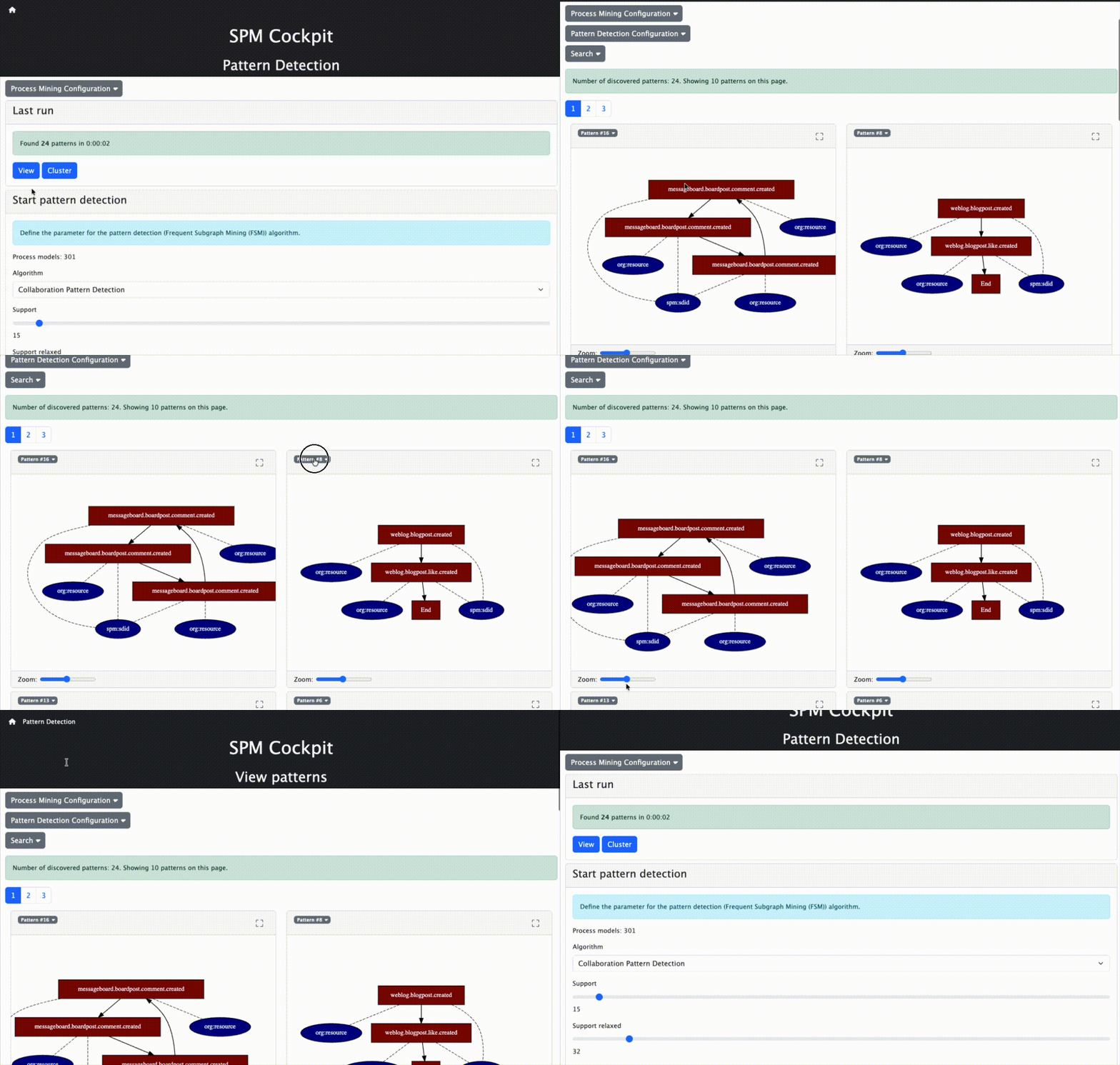
View the results
Once the FSM is complete, the resulting subgraphs (interpreted as patterns) can be visualized.
Users can explore each subgraph using zoom and mouse navigation controls.